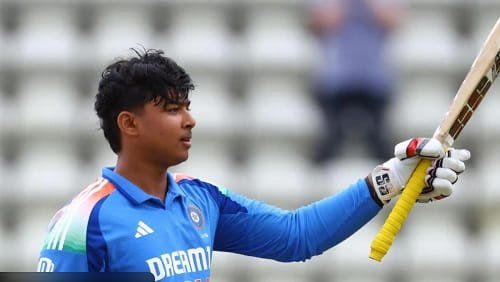
India’s rising cricket sensation Vaibhav Sooryavanshi has made a decision that goes far beyond cricket scores and centuries. At just 14, the young batter has chosen not to appear for his Class 10 board examinations, a move that has sparked nationwide discussion about education, pressure, and the cost of early sporting excellence.
This is not a story about failure or avoidance. It is a story about timing, priorities, and the difficult choices faced by child prodigies in modern sport.
A Schedule That Left No Space for School
Vaibhav’s decision was driven by a simple reality: his cricket calendar no longer resembles that of a school student. Over the past year, he has been constantly on the move — national camps, international youth tournaments, high-intensity training blocks, and recovery periods that leave little mental space for academic preparation.
Board exams demand consistency, routine, and focused study over months. For Vaibhav, those months were spent under floodlights and in practice nets, not classrooms. Attempting the exams without preparation would have been unfair — both to him and to the education system.
Rather than treat the exams as a formality, the decision was taken to step back and reassess.
Not Dropping Out, Just Stepping Aside
One of the biggest misconceptions surrounding this news is that Vaibhav has “quit” education. That is not the case.
Skipping a board exam does not end academic options. Students can reappear later, switch to alternative education pathways, or complete certifications through flexible systems. For athletes competing at elite levels, this approach is not unusual, even though it remains uncomfortable for a society deeply attached to traditional milestones.
In Vaibhav’s case, the decision is about postponement, not abandonment.
The Pressure of Being 14 in a 24-Year-Old World
What makes this situation especially striking is Vaibhav’s age. At 14, most students are concerned about homework, friendships, and exams. Vaibhav, meanwhile, is dealing with performance analysis, media scrutiny, and national expectations.
Early fame compresses life stages. Decisions that most people face in their early twenties arrive a decade earlier. Choosing between cricket and exams is not a normal teenage dilemma — but for Vaibhav, it has become unavoidable.
This kind of pressure is invisible to spectators but deeply felt by young athletes.
A Broader Debate on Education and Elite Sport
Vaibhav’s case has reopened an old debate in India: Can top-level sport and formal schooling truly coexist at a young age?
Supporters of his decision argue that opportunities like these are rare and time-sensitive. Athletic windows are short. Form, fitness, and selection can change quickly. Missing one year of exams may be recoverable; missing a career-defining phase may not be.
Critics worry about the risks. Injuries, loss of form, or burnout can abruptly end promising careers. Education, they argue, provides stability when sport does not.
Both sides have valid concerns — and Vaibhav stands right at the center of this tension.
What the System Must Learn From This
Rather than judging the decision itself, many experts believe the focus should shift to systemic support. India produces exceptional sporting talent, but its academic structures are still rigid for elite athletes.
Flexible curricula, structured distance education, and athlete-specific academic planning remain limited. Until those gaps are addressed, young talents like Vaibhav will continue to face all-or-nothing choices.
His case is less about individual preference and more about institutional limitations.
Mental Health and Long-Term Growth
Another layer often overlooked is mental health. Preparing for board exams while competing at international levels can lead to exhaustion, anxiety, and burnout — especially for adolescents.
By stepping away from exams this year, Vaibhav may be protecting his mental space during a crucial developmental phase. Growth at 14 is not just technical or physical; it is emotional.
Giving a young athlete room to breathe can sometimes be the most responsible decision.
What Comes Next
Vaibhav Sooryavanshi’s cricket journey continues. His education journey is paused, not closed. The two paths may reconnect later — in a different form, at a different pace.
For now, his decision forces India to confront an uncomfortable truth: extraordinary talent often demands extraordinary flexibility. The real question is not whether he skipped an exam, but whether the system is prepared to support children who outgrow its timelines.
At 14, Vaibhav has already shown courage with the bat. This decision shows another kind of courage — choosing what is realistic over what is expected.