There is one sentence that we hear often from patients with severe bone loss: “Doctor, I was told that I don’t have enough bone for implants, my case is too complicated”
A decade ago, the honest answer would have been hesitant: “We can try, but we are not sure”. Imaging was less detailed, planning was limited, and severe bone loss often meant extensive grafting, or simply being told implants weren’t possible. Today, the answer sounds different: “Let’s see exactly what bone you have, and discuss your options.” That word — options — is the important one. High-resolution 3D imaging, refined grafting materials, graftless techniques and digital planning now give clinicians far more ways to work with the bone a patient actually has.
What makes a case “complicated”?
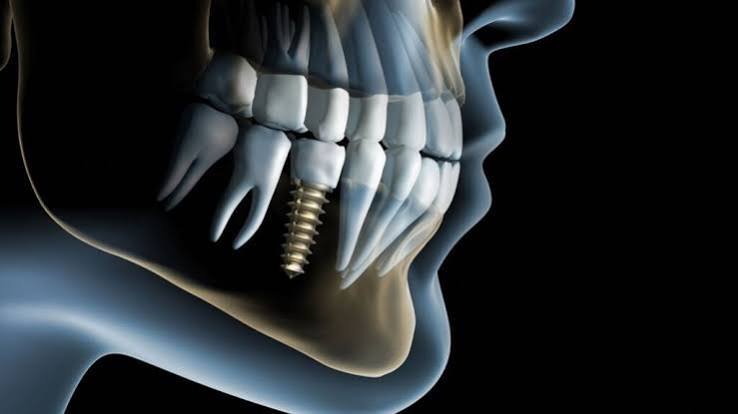
It all comes down to the bone. Implants need healthy bone around it for stability..
Treatment becomes more challenging when bone is too soft, narrow, short, unevenly distributed, or absent where an implant would ideally sit. In a full-mouth case, the challenge isn’t only locating enough bone — it’s placing implants that support teeth which function well, look natural, and hold up the facial proportions naturally.
Why Complex Cases Used to Be So Difficult?
For years, clinicians relied on two-dimensional X-rays, manual measurements and freehand placement. But the jaw is a three-dimensional structure, and flat imaging could not analyse bone width, shape and quality before surgery. Occasionally, the bone was discovered to be softer than expected mid-treatment, and the patient was refused the implant. Patients were also often referred out for a full medical CT just for a clearer picture, adding cost, time and radiation exposure.
Thus, when there truly wasn’t enough bone, options narrowed sharply. Some patients were simply told implants weren’t possible. Others went through extensive grafting protocols, sometimes with bone harvested from the hip followed by months of waiting and hoping the graft integrated well enough.
What has changed?
The biggest transformation is, today we can see the problem before we try to solve it.
The move from flat 2D X-rays to 3D CBCT imaging lets bone be assessed from every angle, at a considerably lower radiation dose than a medical CT. The team can pinpoint exactly where bone is present, measure its height, width, quality, and digitally plan the ideal implant position and angle to the millimetre — before ever picking up an instrument. That plan can then be transferred into the mouth using a custom surgical guide, so the implant follows a pre-planned path rather than relying purely on freehand instinct in the chair.
As Dr Shailaja, chief implantologist at FMS Dental describes it:
“Earlier, some of these cases were a nightmare to plan. We were doing manual jaw mapping, and there was much more we simply could not know beforehand. Today, I can see the bone in three dimensions and plan the final implant positions before I begin. In necessary cases, I transfer that plan to a surgical guide rather than placing implants freehand — meaning more success and predictability.”
What if there really isn’t much bone?
This is where modern implantology offers far more flexibility than before. Sometimes rebuilding the bone first is still right. But in many other cases, rather than regenerating bone everywhere it’s been lost, clinicians can make strategic use of the bone that remains through graft-less techniques.
If there’s strong bone at the front of the jaw but little at the back, an All-on-4 or All-on-4Plus approach can angle implants into the stronger bone to support a full, fixed arch. When the upper jaw has lost significantly more bone, zygomatic implants can be anchored into the cheekbone \, bypassing the weak jaw entirely. Some patients receive a combination of both, while particularly severe cases may call for Quad Zygoma, pterygoid implants, or trans-nasal approaches, depending on exactly where stable bone still exists.
Grafting — and the Implant Itself — Have Evolved
Grafting remains important in advanced implant care, but it looks different than it used to. Rather than relying mainly on bone harvested from the patient’s own body, clinicians now use processed donor bone, animal-derived grafts, or synthetic materials, combined with smaller amounts of the patient’s own bone if needed. Techniques like guided bone regeneration, ridge augmentation and sinus grafting allow better healing and strong bone.
The implant itself has changed too – surfaces are now engineered for stronger initial stability, which is what makes immediate loading possible in suitable cases. Patients may not need to wait weeks for fixed teeth Patients may not need to wait weeks, as intraoral scans, CBCT data and rapid 3D printing let clinicians produce functional temporary teeth within hours.
The Aesthetics factor:
Patients don’t walk in wanting implants. They want teeth that let them smile without thinking about it. That’s why at FMS Dental, the team starts with the end result in mind — tooth position, bite, facial proportion and the final smile, considered before a single implant position is decided.
But while technology has made this planning more precise, it does not replace experience. What it does is provide better information and wider options to an experienced implantologist. Dr Shailaja Reddy, Chief Implantologist – FMS Dental, remains one of the foremost implantologists in India, having trained at centres behind the major developments in modern implantology. That training’s value isn’t simply knowing more techniques; it’s knowing which technique is right for a given case, and which one isn’t.
The real advancement for us at FMS Dental is how our surgical team is trained to approach complex cases. Deep, hands-on expertise in both grafting and graftless solutions — All-on-4, zygomatic, and beyond — means we rarely have to turn a patient away simply because they don’t have enough bone. We find another way in. Because in the end, what matters to the patient is being able to eat without hesitation, speak without self-consciousness, and smile like they mean it. That is the real measure of modern implantology, and the standard every smile at FMS dental is built to.