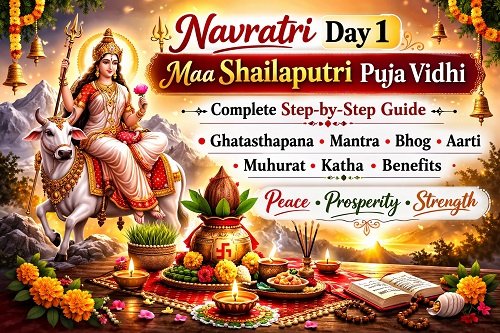
Chaitra Navratri 2026 begins on 19 March (Thursday). This day marks the arrival of Maa Durga into homes through Ghatasthapana (Kalash Sthapana). The first day is dedicated to Maa Shailaputri, the daughter of King Himalaya, symbolizing purity, strength, and new beginnings.
Her calm form, riding a bull and holding a trident and lotus, represents balance between power and peace. Worshipping her with devotion is believed to bring stability, courage, and positive energy into life.
Who is Maa Shailaputri?
Maa Shailaputri is the first form of Navdurga. The name itself explains her identity:
- “Shaila”means mountain
- “Putri”means daughter
She is the daughter of Himalaya and is also considered the reincarnation of Maa Sati. This form represents the root chakra (Muladhara), which is linked to stability and grounding in life.
Devotees believe that starting Navratri with her worship helps build a strong spiritual foundation for the next nine days.
Shubh Muhurat for Ghatasthapana (2026)
- Date:19 March 2026
- Day:Thursday
- Best Time:Morning during Pratipada Tithi (sunrise to mid-morning is generally considered ideal)
It is important to perform Kalash Sthapana during the correct time, as it marks the formal beginning of Navratri worship.
Puja Samagri (Required Items)
Before starting, keep these items ready:
- Clean red cloth
- Kalash (pot) with water
- Mango leaves and coconut
- Barley seeds (Jau)
- Ganga Jal
- Flowers (especially red or white)
- Kumkum, haldi, and rice
- Diya (lamp) and incense sticks
- Fruits and sweets for bhog
Step-by-Step Puja Vidhi
1. Clean and Prepare the Space
Start by cleaning your home, especially the puja area. Spread a red cloth and place the idol or image of Maa Shailaputri.
2. Ghatasthapana (Kalash Sthapana)
- Fill the Kalash with water and add Ganga Jal
- Place mango leaves on top
- Put a coconut wrapped in red cloth above it
- Sow barley seeds in a small pot near the Kalash
This Kalash is considered the seat of Maa Durga for nine days.
3. Invoke the Goddess
Light a diya and incense. Close your eyes and invite Maa Shailaputri into your home with devotion.
4. Offerings and Worship
- Apply kumkum and rice to the idol
- Offer flowers and fruits
- Perform aarti with full devotion
5. Chant the Mantra
Beej Mantra of Maa Shailaputri:
“Ya Devi Sarvabhuteshu Maa Shailaputri Rupena Samsthita
Namastasyai Namastasyai Namastasyai Namo Namah”
Chanting this mantra helps bring inner strength and mental peace.
Bhog (Food Offering)
On the first day, offering pure desi ghee is considered very auspicious.
- It is believed to improve health
- Removes negativity
- Brings blessings of a disease-free life
After offering, you can distribute it as prasad.
Auspicious Color of the Day
The color associated with Maa Shailaputri is Grey.
- Symbolizes balance and calmness
- Wearing this color during puja is believed to attract positive energy
Maa Shailaputri Katha (Short Story)
In her previous birth, Maa Shailaputri was Sati, the wife of Lord Shiva. After sacrificing herself in Daksha’s yajna, she was reborn as the daughter of Himalaya.
In this form, she again performed deep penance to reunite with Lord Shiva. Her story teaches devotion, patience, and unwavering determination.
Aarti (Short Version)
“Om Jai Ambe Gauri, Maiya Jai Shyama Gauri…”
You can sing this aarti after completing the puja to conclude the ritual.
Benefits of Worshipping Maa Shailaputri
- Brings mental peace and stability
- Increases confidence and courage
- Removes negativity from life
- Helps in starting new journeys with positivity
Many people feel a sense of grounding and clarity when they begin Navratri with proper devotion on this day.
Final Thoughts
The first day of Navratri is not just a ritual—it sets the tone for the next nine days. Maa Shailaputri teaches us to stay strong, calm, and connected to our roots.
You don’t need anything grand. A simple puja done with a clean heart and true devotion is enough.
Start your Navratri with faith, and the energy you build today will carry forward through all nine days.