
Hinduism is one of the world’s oldest religions, with a history stretching back more than 4,000 years. It is rich in culture, traditions, philosophy, and spiritual teachings. While Hinduism has followers around the world, it is primarily rooted in India, where nearly 80% of the population identifies as Hindu. This naturally raises a question: Why is Hinduism mostly practised in India, and why does the religion have such a strong connection to this land?
The answer lies in history, geography, culture, language, and the way the religion evolved. Hinduism did not spread through force or missionary expansion like many other religions. Instead, it grew slowly and organically from the soil of the Indian subcontinent. Here’s a deeper look at why Hinduism remains most prominent in India.
1. Hinduism Originated in the Indian Subcontinent
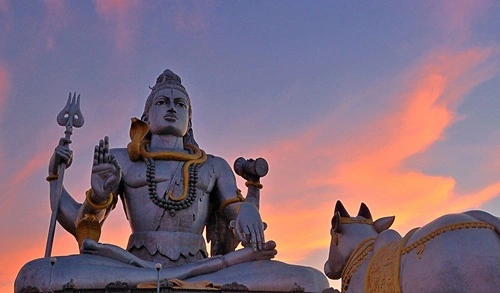
Unlike many world religions that were founded by one prophet or one sacred book, Hinduism has no single founder. It emerged from the ancient traditions, philosophies, and cultural practices of the people living around the Indus and Gangetic plains.
The earliest roots of Hinduism can be traced to:
- The Indus Valley Civilization
- The Vedic age
- Early tribal beliefs
- Local customs and rituals
Because the religion grew within India’s ancient civilisation, it naturally became tied to Indian geography, society, and culture.
2. No Missionary Tradition
One of the biggest reasons Hinduism remains mostly in India is that it never had an organised missionary system. While religions like Christianity, Islam, and Buddhism spread across continents through missionaries, trade routes, and rulers, Hinduism spread mainly through:
- Family traditions
- Community customs
- Local temples
- Oral teachings
There was no attempt to convert large populations outside India. Its teachings focused more on self-realisation and personal spirituality, not expanding the religion globally.
This is why Hinduism remained strongest where it originated—India and nearby regions like Nepal.
3. Deep Connection With Indian Culture and Social Structure
Hinduism evolved alongside Indian society. Many aspects of daily life in India—festivals, rituals, family systems, food habits, and traditional practices—are influenced by Hindu beliefs.
For example:
- Festivals like Diwali, Holi, Navratri, and Pongal are linked to Hindu mythology and seasons.
- The concept of dharma (duty) shapes family and social responsibilities.
- The varna and jati structures influenced social organisation for centuries.
- Temple culture developed uniquely in different regions of India.
Because Hinduism is woven deeply into the cultural fabric of India, it remained most prevalent here.
4. Geographic Isolation in Ancient Times
In ancient times, India was geographically separated from many parts of the world by:
- The Himalayas in the north
- The Indian Ocean in the south
- Dense forests and deserts in the west and east
This natural isolation reduced the movement of people and ideas across borders. As a result, Hinduism developed within India without major external influences.
While trade routes existed, they were not strong enough for large-scale religious spread.
5. Survival Through Historical Challenges
India saw many invasions, migrations, and rulers over the centuries—Greeks, Persians, Mughals, and the British. Yet Hinduism survived and remained the majority religion.
This is because:
- Hinduism is flexible and adaptable.
- It absorbed new ideas instead of rejecting them.
- Local traditions continued independently even during foreign rule.
- Hindu rituals and customs were passed down through families, making them difficult to erase.
Its resilience helped it stay dominant in India.
6. Strong Community and Family Transmission
Hinduism is practiced through families, not just institutions. Children learn rituals, stories, prayers, and customs naturally from parents and elders.
This tradition-based transmission ensured that Hindu culture stayed strong within Indian households, even across generations.
Unlike religions that rely heavily on centralised institutions like churches or mosques, Hinduism survives through decentralised community practices.
7. Shared Identity of Land and Religion
India is often called the cradle of Hindu civilisation. Many sacred places mentioned in Hindu texts are located within India:
- Varanasi
- Ayodhya
- Mathura
- Kashi
- Kedarnath
- Rameswaram
- Dwarka
Rivers like the Ganga, Yamuna, Godavari, and Saraswati are considered holy. The land itself is viewed as sacred, often described as “Dev Bhoomi” (land of gods).
This spiritual geography kept Hindu practice deeply tied to India.
8. Presence in Other Countries—but India Remains the Centre
Though Hinduism is mostly in India, it is also practiced in:
- Nepal (where it is the majority religion)
- Mauritius
- Bali (Indonesia)
- Fiji
- Trinidad and Tobago
- Guyana
- Suriname
- Sri Lanka
These communities emerged mainly through migration during ancient trade and colonial labour movements. But despite global presence, India remains the cultural and philosophical heart of Hinduism.
Conclusion: A Religion Rooted Deeply in Its Homeland
Hinduism remains strongest in India because it grew naturally within the country’s culture, geography, and history. Without missionary expansion or political enforcement, the religion stayed close to its origins. Its traditions blend seamlessly with Indian life from festivals to food, from temples to family values.
While Hinduism is spreading slowly through global migration and interest in yoga and meditation, India will always remain its spiritual home. Here, the religion is not just a belief system—it is a way of life woven into the very soul of the nation.

