South Africa delivered one of their most complete performances of the tournament on Sunday, defeating India by a massive 76 runs in a crucial Super 8 match of the ICC Men’s T20 World Cup. What was expected to be a close, high-pressure contest turned into a one-sided affair as South Africa outplayed India in all three departments — batting, bowling, and fielding. The defeat marked India’s first loss of the competition and raised serious questions about their batting under pressure.
Toss and Match Conditions
The South Africa national cricket team won the toss and elected to bat first. The pitch looked good for batting early, with even bounce and short boundaries encouraging stroke play. South Africa’s decision showed confidence in their batting depth and proved to be the right call. India, led by the India national cricket team, started with an attacking bowling lineup, hoping to strike early and put pressure on the opposition.
South Africa Innings: Recovery and Acceleration
South Africa’s innings did not begin smoothly. Indian bowlers made early inroads, removing three top-order batters within the powerplay. At one stage, South Africa were struggling at 20 for 3, and India appeared to have the upper hand.
The game changed when David Miller and Dewald Brevis came together. Miller played a calm yet authoritative knock, using his experience to steady the innings. Brevis supported him brilliantly, rotating strike and attacking when needed. The duo added a vital 97-run partnership, shifting momentum firmly in South Africa’s favor.
Miller top-scored with 63 runs off 35 balls, striking the ball cleanly and targeting the death overs. Brevis contributed 45 runs from 29 balls, ensuring the innings never lost momentum. Late hitting from the lower middle order pushed South Africa to a strong total of 187 for 7 in 20 overs, a score that put India under immediate pressure.
For India, Jasprit Bumrah was the standout bowler, finishing with 3 wickets for 15 runs, but the rest of the attack struggled to contain runs in the final overs.
India Chase: Early Collapse and No Recovery
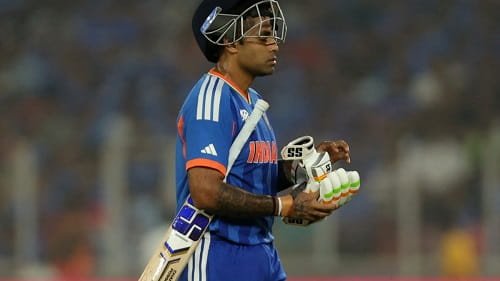
India’s chase got off to a disastrous start. In the very first over, Ishan Kishan was dismissed for a duck, sending shockwaves through the Indian camp. The early wicket exposed India’s middle order far sooner than planned.
Wickets continued to fall at regular intervals. South Africa’s bowlers bowled with discipline, maintaining tight lines and forcing mistakes. The required run rate climbed rapidly, increasing pressure on incoming batters. India failed to build even a single meaningful partnership during the chase.
Shivam Dube was the lone fighter, scoring 42 runs, but he found no support from the other end. Once he was dismissed, the result was all but sealed. India were eventually bowled out for 111 runs in 18.5 overs, falling well short of the target.
South Africa’s Bowling Masterclass
South Africa’s bowling was sharp and relentless.
● Marco Jansen was the star, picking up 4 wickets for 22 runs, using bounce and pace to trouble Indian batters.
● Keshav Maharaj controlled the middle overs superbly, taking 3 wickets and breaking any hopes of a comeback.
● Support bowlers kept the pressure constant, never allowing India to settle.
Key Turning Points
● South Africa’s recovery after collapsing to 20/3
● The Miller–Brevis partnership that set up a strong total
● India losing early wickets during the chase
● Jansen’s four-wicket spell that dismantled India’s batting order
What This Result Means
This emphatic win significantly improves South Africa’s net run rate and strengthens their position in the Super 8 standings. It also sends a clear message that they are serious contenders for the semifinals.
For India, the loss is a wake-up call. While one defeat does not end their campaign, the manner of the loss — especially the batting collapse — will be a concern going forward. The team will need to regroup quickly and address their struggles against sustained pressure.
Sunday’s match served as a reminder that in T20 cricket, one bad phase can decide the entire game — and South Africa made sure they capitalized fully.