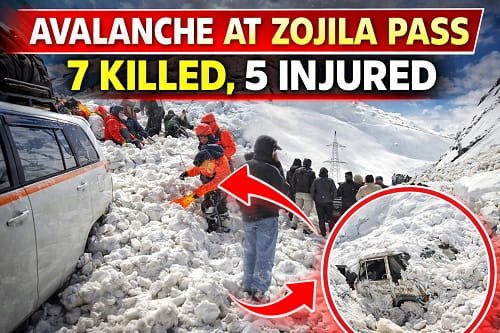
A sudden avalanche at Zojila Pass has once again shown how unpredictable the Himalayas can be. The tragic incident left 7 people dead and 5 injured, turning a routine journey into a deadly disaster within minutes.
This mountain pass is not just any road. It is a critical link connecting Jammu and Kashmir with Ladakh. When something goes wrong here, it affects both lives and connectivity.
What Happened That Day
The avalanche struck the Srinagar–Leh highway, one of the most important and challenging roads in India. According to early reports, several vehicles were moving through the pass when a massive wall of snow suddenly came crashing down.
Drivers had little to no time to react. Within seconds, vehicles were buried under thick layers of snow and debris. Some passengers got trapped inside, while others were thrown off the road due to the force.
Rescue teams were alerted immediately, but reaching the site was not easy. Snowfall, poor visibility, and narrow roads slowed down emergency response efforts.
Casualties and Injuries
The human cost of the incident is heartbreaking.
- 7 people lost their lives
- 5 others were seriously injured
The injured were quickly moved to nearby medical facilities. Some are said to be in stable condition, but the emotional and physical impact will last much longer.
For families of the victims, this was not just an accident. It was a sudden, irreversible loss.
Why Zojila Pass Is So Risky
Zojila Pass has always been known as one of the most dangerous stretches in India. There are a few reasons why accidents like this keep happening:
1. Extreme Weather
The region experiences heavy snowfall, especially during winter and early spring. Snow keeps piling up, making the slopes unstable.
2. Avalanche-Prone Terrain
The geography itself is risky. Steep mountains and loose snow layers create the perfect conditions for avalanches.
3. Narrow and Challenging Roads
The road is often narrow, with sharp turns and deep valleys on one side. Even without snow, driving here requires skill and caution.
4. Sudden Weather Changes
Weather in the mountains can change in minutes. Clear skies can quickly turn into snowstorms, increasing danger levels.
Impact on Travel and Connectivity
The avalanche has disrupted movement on the Srinagar–Leh highway, which is a lifeline for both civilians and defense forces.
- The road has been temporarily closed
- Several vehicles are still stranded
- Supply movement between regions is affected
For Ladakh, which depends heavily on this route, such disruptions can create serious logistical challenges.
Authorities are now working to clear the snow and restore traffic, but it may take time depending on weather conditions.
Rescue and Relief Operations
Rescue teams, including local authorities and emergency responders, rushed to the site as soon as the news broke.
Operations included:
- Searching for trapped individuals
- Digging out buried vehicles
- Providing medical assistance to survivors
However, rescue work in such conditions is never easy. Thick snow, freezing temperatures, and the constant risk of another avalanche make every step dangerous.
Still, teams continue to work around the clock.
A Harsh Reminder from the Mountains
Incidents like this are not new, but they never feel routine. Every avalanche brings fresh loss and raises the same question—can these tragedies be prevented?
While authorities do monitor weather and restrict travel during high-risk periods, nature in high-altitude regions often behaves unpredictably.
For travelers, this is a reminder to:
- Check weather updates before travel
- Follow official advisories
- Avoid unnecessary movement during heavy snowfall
Final Thoughts
The avalanche at Zojila Pass is a painful reminder of how fragile life can be in extreme conditions. A road that connects regions also carries hidden risks that can turn deadly without warning.
As rescue efforts continue and the highway slowly returns to normal, the focus remains on the victims and their families. For them, this is not just news—it is a moment that changed everything.
The mountains remain as majestic as ever, but they demand respect. And sometimes, they remind us of their power in the harshest way possible.