There’s that one corner near the entrance where everyone leaves their bags. Another beside the sofa has been empty for months, and you’ve probably thought about putting a plant there at least five times. Somehow, you never get around to it.
Then one weekend, you finally decide to do something about these spaces. You start looking at tables, lamps and wall decorations, only to realise you’re not sure what would actually look good there. A vase seems like a nice idea, but where will you keep it? And will that little wooden table leave enough room for people to walk past?
The good thing is, you don’t have to change the entire room. Sometimes an old photograph, a small table or even moving something from another room is enough. It helps to look at how the corner is being used before deciding what belongs there.
1. Spot Empty Corners That Deserve a Little Attention
Have a look around your house when everyone’s going about their day. Not when you’ve just finished cleaning and everything is in its place, but on a regular afternoon when people are coming and going.
You’ll notice certain spots collect things without anybody deciding they should. The dining table might have a pile of letters at one end, or perhaps the shoe cabinet has become the usual place for everyone’s keys. Meanwhile, the wall beside the entrance is completely empty.
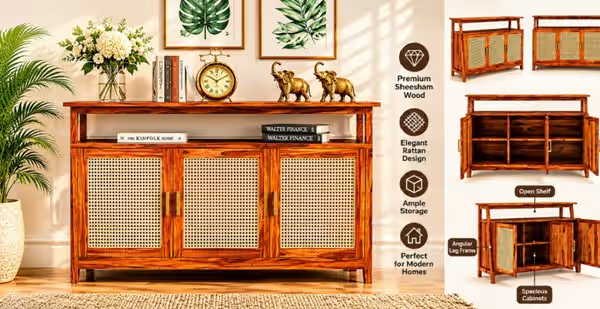
That’s where a Console Table could come in handy. A narrow table along the wall can give you somewhere to keep keys, sunglasses and the occasional courier packet. You could add a small tray so everything doesn’t end up scattered across the surface.
But measure the space first. Some console tables for living room areas look quite compact in photographs, then turn out to be deeper than expected. If people regularly walk through that part of the house, you don’t want furniture sticking out into the passage.
And don’t feel you have to fill every corner. If there’s nothing you need to keep there, leaving it empty is perfectly fine.
2. Choose a Purpose for Every Unused Space
A lovely vase in a shop can be difficult to resist. You imagine it sitting beside the sofa, bring it home and then spend the next half-hour moving it around because it doesn’t look quite right anywhere.
Before buying anything, think about what would actually be useful in that particular spot.
Near the entrance, you might want a place for keys and wallets. Beside your favourite chair, perhaps a little table for your tea and book would be more useful. And if there’s an empty wall near the dining area, a mirror or a family photograph might be all it needs.
There’s no rule that says every corner has to hold furniture. Some spaces look better with nothing on the floor, particularly in smaller rooms where people need space to move around.
Before browsing Home decor Items, check what you’ve already got at home. That ceramic vase sitting in the cupboard, the brass bowl you received as a gift or the photograph you’ve been meaning to frame might finally find a place.
You may even discover that you don’t need to buy anything. It’s surprising how different an old piece can look when you move it somewhere else.
3. Add Character Through Colours, Textures and Finishing Touches
Think about the things you’ve collected over the years. Maybe there’s a wooden photo frame from a family holiday, a brass diya you bring out during festivals or a ceramic bowl you picked up while travelling. They weren’t bought together, and you probably never thought of displaying them in the same place.
But why not try?
If you’ve got a wooden console, you could keep a ceramic vase at one end and a photograph beside it. Perhaps there’s a little space left for a plant. You don’t have to match every single thing, especially when the rest of your home already has its own colours and furniture.
And if you love colourful cushions, patterned curtains and bright artwork, there’s no reason to suddenly make every corner plain because that’s what you’ve seen in a decorating photograph.
The same goes for home decorative pieces. Something made from wood might sit nicely beside a ceramic object, while a metal lamp could look good against a painted wall. Try different arrangements and see what you like.
You don’t need to follow every decorating trend either. A family photograph that’s been in the house for years may mean much more to you than another showpiece bought just because it looked nice in a shop.
If you’re looking through WoodenStreet’s home accessories, think about how a new piece would sit beside the things you already own. There’s no need to replace everything just to make a corner look different.
4. Keep Decorative Arrangements Balanced and Clutter-Free
You buy a small table and put a vase on it. Then somebody gifts you a candle holder, so that goes beside the vase. A few weeks later, there’s a photo frame, a plant and two little showpieces on the same table.
Now there’s hardly any room left, and every time you dust it, you have to move six different things.
This happens quite easily because small decorative items don’t seem to take up much space individually. But put too many together, and the table starts looking crowded.
Try keeping just a few things you really like. A lamp and a photograph might be enough for a narrow console. If it’s near the entrance, leave some room for keys or anything else people put down when they come home.
And those tiny decoration home items that look so lovely in the shop? Think about how often you’ll have to clean them. A shelf full of small pieces can collect dust quickly, especially near an open window.
There’s nothing wrong with keeping some decorations away for a while. You can bring them out during festivals or whenever you feel like changing the room a little. That way, you’re not trying to display everything you own at once.
Also, don’t worry if one shelf looks a little emptier than another. Not every surface needs to be filled from one end to the other.
5. Tie Different Corners Together for a Cohesive Home
Suppose you’ve got a wooden table near the entrance and a small shelf beside the sofa. They don’t need to look identical, but you probably want them to feel like they belong in the same house.
One way to do that is to look at the colours and materials already around you.
Perhaps your sofa cushions have a little green in them, or there’s a wooden frame hanging above the television. You could repeat that colour or material in another corner through a plant, a tray or a photograph. Nothing too obvious. Just a small connection between the spaces.
But please don’t buy matching vases for every corner. After a while, the room can start looking like a furniture showroom where everything has been arranged in pairs.
Your home can have different things in different places. A mirror near the entrance, a lamp beside the sofa and a plant near the window can all look perfectly fine together.
When choosing an item for decoration, try placing it in a few different spots before deciding where it should stay. A bright ceramic piece might look lovely against a plain wall but feel a little too much beside colourful curtains.
And sometimes, the best thing you can do is remove something. If a corner already has a large piece of furniture, it may not need three more decorations around it.
6. Turn Empty Corners into Beautiful, Functional Spaces
Not every corner needs a big change. Sometimes all it takes is moving a chair slightly, hanging a photograph or taking that old vase out of the cupboard.
And don’t arrange everything only for how the room looks when guests come over. Think about what happens on an ordinary day.
Someone comes home and drops their keys near the door. You’re sitting on the sofa and want somewhere to keep your cup of tea. The children leave their school bags in the passage because that’s where they’ve always kept them.
These little habits tell you quite a lot about what your home actually needs.
Maybe a narrow console near the entrance would be useful. Perhaps the corner beside the sofa only needs a lamp. Or you might find that moving a plant from the balcony to the living room gives an empty spot a completely different look.
If you’re considering a console table or a few accessories from WoodenStreet, measure the available space and think about what you’ll keep there. Something that looks lovely in a photograph should also make sense once it’s in your home.
And don’t rush to decorate every corner over one weekend. Try moving a few things around first. Live with the new arrangement for a few days and see whether you still like it.
That empty corner you’ve been ignoring might already have everything it needs, just sitting in another part of the house.
And if it still looks a little bare, at least you’ll have a better idea of what to look for instead of bringing home another vase and wondering where to keep it.