In contemporary architecture, building facades are more than protective layers. They define identity, support energy performance, and shape how buildings connect with their surroundings. As design expectations continue to evolve, choosing the right facade material has become important for both appearance and long-term performance. Among the widely used options today, glass and sintered stone stand out for their distinct strengths in modern exterior design. Together, they help create facades that balance aesthetics, durability, and functional efficiency in contemporary buildings.
Why Modern Building Facades Matter?
Modern building facades play an important role in shaping how a structure performs and is perceived. They are no longer just exterior coverings but active systems that influence energy efficiency, natural lighting, and indoor comfort. Facades also define the visual identity of a building, making them a key part of architectural expression. With growing focus on sustainability and performance, modern facades help regulate heat, reduce energy use, and improve durability, making them essential in contemporary construction.
Glass in Modern Building Facades
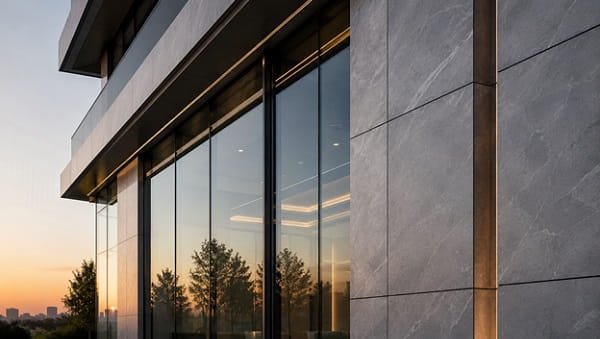
Glass is a widely used material in contemporary architecture, valued for its transparency, light transmission, and reflective qualities. In building facades, it helps create open, visually connected spaces by allowing natural daylight to enter the interiors. It also enhances architectural expression by reflecting the surroundings, sky, and city. Modern glass systems are engineered for strength and performance, offering improved thermal efficiency, safety, and durability, making them suitable for both commercial and high-rise facade applications.
Sintered Stone in Facade Applications
Sintered stone is an advanced engineered surface created by compressing natural minerals under high heat and pressure. This process produces a dense, durable material that performs well in exterior applications. In modern building facades, it is valued for its strength, stability, and resistance to UV exposure, moisture, temperature changes, and urban pollution. Its non-porous nature prevents absorption, helping maintain appearance over time. Large-format production reduces the number of joints, enabling seamless, clean architectural finishes and making it a reliable choice among modern facade materials.
Key Differences Between Glass and Sintered Stone
Glass and sintered stone are widely used in modern architecture, but they differ in their performance and in how they shape building facades. Understanding these differences helps in selecting the right material based on design intent and functional needs.
| Aspect | Glass | Sintered Stone |
| Visual Character | Transparent, reflective, light-focused | Solid, textured, material-driven |
| Light Performance | High daylight penetration | Controlled light interaction |
| Durability | Strong with engineered coatings | High resistance to heat, stains, and impact |
| Maintenance | Requires regular cleaning | Low-maintenance, non-porous surface |
| Design Use | Emphasizes openness and views | Emphasizes depth and surface continuity |
Both materials support contemporary building facades by offering distinct advantages that suit different architectural goals and design approaches.
Energy Efficiency and Environmental Performance
Energy performance plays a central role in modern building facades. Material choices directly affect heat control, daylight access, and overall building efficiency.
- Thermal Control: Glass facades can manage heat gain through advanced coatings and glazing systems. This helps maintain indoor comfort and reduces energy consumption.
- Daylight Optimization: Glass allows natural light to enter interior spaces. This reduces dependence on artificial lighting during the day.
- Heat and UV Resistance: Sintered stone performs well under UV exposure and temperature changes. It maintains surface stability in outdoor conditions.
- Energy Balance: Combining transparent glass with solid materials such as sintered stone improves control of heat and light within the building.
- Sustainable Performance: Both materials support long-term efficiency. Their durability reduces maintenance needs and limits the need for frequent replacements.
These properties contribute to facades that are efficient, stable, and aligned with modern sustainability goals.
How to Choose the Right Facade Material?
When choosing high-performance materials, the selection depends on specific project requirements and the intended environment. Consider these objective factors:
- Maintenance Requirements: Evaluate the surface’s porosity and chemical resistance to determine cleaning protocols and long-term care needs.
- Environmental Stability: Assess how the material reacts to UV exposure and temperature fluctuations, especially for outdoor or high-heat applications.
- Visual Uniformity: Determine if the project requires a consistent pattern across multiple slabs or if natural variations are acceptable.
- Physical Specifications: Compare the weight, thickness, and tensile strength of each option to ensure compatibility with the structural support.
The final decision should align the material’s technical properties with the functional demands of the space. Focusing on measurable attributes like scratch resistance and thermal stability ensures the surface meets the necessary performance standards.
Choosing the Right Solution for Modern Facades
The selection of building facades today is about achieving a balance between design intent and real-world performance. Glass brings lightness and transparency, while sintered stone delivers strength and long-term resilience. Together, they allow architects to create facades that are both expressive and practical.
Advanced surface solutions like Neotra Advanced Surfaces further support this evolution by offering large-format slabs, consistent finishes, and NSF-certified hygiene standards. With IGBC-aligned sustainability features, they illustrate how modern facade materials are moving toward more responsible, performance-driven design choices.
Conclusion
Glass and sintered stone are widely used facade materials in contemporary architecture, each contributing differently to modern building facades. Glass supports openness, natural light, and visual connection with surroundings, while sintered stone offers strength, durability, and continuous surface appeal. When selected based on project requirements and environmental conditions, these materials help create facades that balance aesthetics and performance. Their combined use allows architects to design exteriors that are functional, visually consistent, and suitable for long-term architectural and urban applications.