No, Tibet is not part of India. Today, Tibet is officially governed by China as the Tibet Autonomous Region and several adjacent Tibetan areas under Chinese administration.
However, Tibet shares very deep historical, cultural, religious, and geographical connections with India. Because of these ties — and because the Dalai Lama and the Tibetan government-in-exile live in India — many people become confused about Tibet’s status.
The reality is that Tibet is not part of India politically or legally, although India and Tibet have had strong links for centuries.
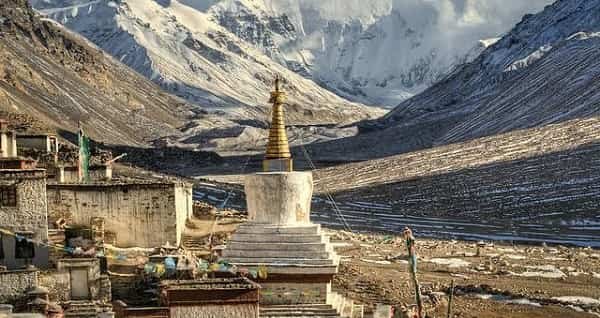
Where Is Tibet Located?
Tibet is a vast high-altitude region located in the Himalayan area of Asia.
It borders several countries, including:
- India
- Nepal
- Bhutan
The capital city of Tibet is Lhasa.
Tibet is often called the “Roof of the World” because of its extremely high elevation and massive mountain ranges.
Is Tibet Officially Part of China?
Yes. Internationally, Tibet is officially recognized as part of China.
The Chinese government considers Tibet an inseparable part of Chinese territory and governs it through the Tibet Autonomous Region.
Most countries in the world, including India, officially recognize Tibet as part of China.
Historical Relationship Between Tibet and India
Although Tibet is not part of India, the two regions have ancient cultural and religious connections.
Buddhism
One of the strongest links comes through Buddhism.
Buddhism originated in India and later spread into Tibet many centuries ago.
Indian Buddhist scholars and monks heavily influenced Tibetan religion, philosophy, and culture.
Ancient Indian centers such as Nalanda University played a major role in shaping Tibetan Buddhist traditions.
Trade and Himalayan Routes
For centuries, India and Tibet were connected through:
- Himalayan trade routes
- Pilgrimage journeys
- Cultural exchanges
Communities in Himalayan regions often interacted closely across borders.
Was Tibet Ever Part of India Historically?
No. Tibet was never officially part of independent India or ancient Indian empires in a long-term political sense.
While Indian culture strongly influenced Tibet, Tibet historically functioned separately under its own rulers, religious leaders, and political systems.
At different times in history, Tibet also had varying relationships with Chinese dynasties and Mongol rulers.
Tibet Before Chinese Control
In the early 20th century, especially after the fall of China’s Qing Dynasty in 1911, Tibet operated with substantial independence for several decades.
During this period:
- Tibet managed its own government
- It maintained religious leadership under the Dalai Lama
- China had limited direct control over the region
However, only a few countries treated Tibet as fully independent diplomatically.
China Takes Control of Tibet
After the Communist Party established the People’s Republic of China in 1949, Chinese forces entered Tibet in 1950.
China described this as the “peaceful liberation” of Tibet.
In 1951, Tibetan representatives signed the Seventeen Point Agreement, which formally brought Tibet under Chinese control while promising autonomy and protection for Tibetan culture and religion.
Tensions later increased between Tibetan groups and Chinese authorities.
The 1959 Uprising and India’s Role
In 1959, a major uprising took place in Lhasa against Chinese rule.
After the uprising failed, the Dalai Lama fled Tibet and entered India.
India granted asylum to the Dalai Lama and thousands of Tibetan refugees.
Tibetan Government-in-Exile
The Tibetan government-in-exile was later established in Dharamshala.
This became one of the reasons why many people associate Tibet closely with India.
Even today, India hosts a large Tibetan refugee community and several Tibetan monasteries.
India-China Border and Tibet
Tibet plays a major role in India-China relations because Tibet borders several Indian Himalayan states.
Many border disputes between India and China are connected to the Tibet region, including:
- Aksai Chin
- Arunachal Pradesh border disputes
The 1962 India-China war was also heavily linked to tensions involving Tibet and border boundaries.
Why Do Some People Think Tibet Is Connected to India?
The confusion usually happens because:
- Tibetan Buddhism has deep Indian roots
- The Dalai Lama lives in India
- India hosts Tibetan refugees
- Tibet shares Himalayan cultural ties with India
But cultural and religious connections do not mean Tibet is politically part of India.
Final Answer
So, Tibet is not part of India. Today, Tibet is officially governed by China and internationally recognized as Chinese territory. However, Tibet and India share very deep religious, cultural, and historical links, especially through Buddhism and the presence of the Dalai Lama and Tibetan exile communities in India.