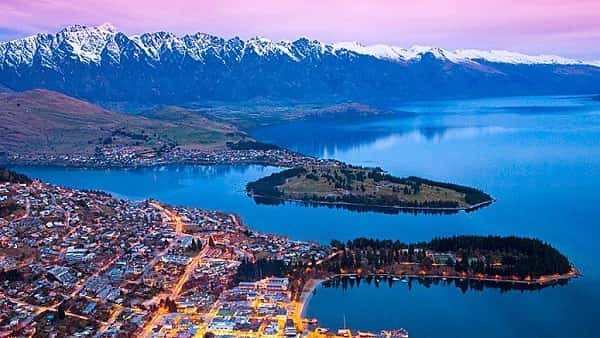
When you turn off a busy highway and onto a path pilgrims have been walking for decades, you feel a certain type of peace. You feel it before you can identify it: the transition from noise to something slower. There are other pilgrimage routes in North India, but two names crop up repeatedly when people begin arranging a trip: Vaishno Devi and Vrindavan. One sends you up a misty mountain near Jammu to a cave temple. The other leads you through narrow pathways where Krishna is claimed to have spent his youth, and the temple bells never cease ringing, even late into the dark.
So if you’ve been going back and forth between Vaishno Devi Tour Packages and Vrindavan Tour Packages, here’s the truth: you don’t have to choose.
Spiritual Escapes in North India, and Why They Keep Pulling People Back
Ask someone who has actually done this circuit what they remember most, and they’ll rarely start with the temples. They’ll talk about the drive through the Shivalik foothills before the Vaishno Devi trek begins. Or the smell of ghee and marigold hanging in the air near Bankey Bihari. Or a stranger pressing prasad into their hands without being asked. And it’s exactly why the better Vaishno Devi Tour Packages and Vrindavan Tour Packages are built the way they are.
Vaishno Devi: The Climb That Humbles You
Vaishno Devi sits roughly 5,200 feet up in the Trikuta Hills near Katra, and it’s one of the most visited pilgrimage sites in the country. Most devotees still choose to walk the 12 to 13 km trek on foot, rain or shine, rather than take the easier options available.
A few things are worth knowing before you go:
- You can do the trek on foot, by pony, palki, or helicopter, whichever suits your time and your knees
- A free Yatra Slip is compulsory, so register online beforehand
- Ardhkuwari, the halfway cave, is where the Mata is believed to have meditated for nine months
- Katra itself has stays for every budget, from basic dharamshalas to genuinely comfortable hotels
- Peak season runs from March to July, then again from September to October; winters are far quieter if crowds aren’t your thing.
Most Vaishno Devi Tour Packages pair Katra with a short stop in Jammu, which gives you time to see the Raghunath Temple and Bahu Fort before or after the climb.
Vrindavan: Where Every Lane Hums With Krishna
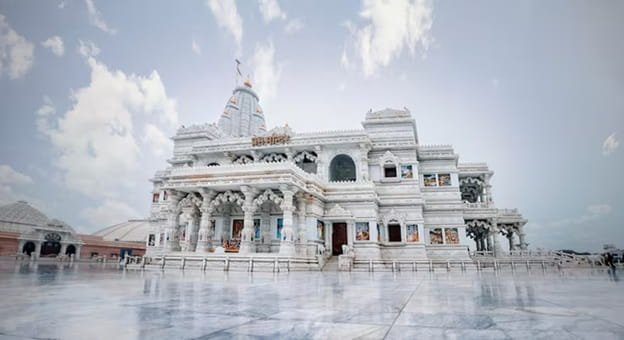
If Vaishno Devi is about the climb, Vrindavan is entirely about the pause. This is where Krishna is believed to have grown up, and you feel that history almost immediately, in the number of temples packed into just a few square kilometres, in the kirtans spilling out of courtyards at hours you wouldn’t expect. Vrindavan Tour Packages follow a similar comfort-first logic to Vaishno Devi Tour Packages, with less altitude and more temple-hopping.
A well-planned Thomas Cook Vrindavan Tour Packages route usually strings together Mathura, Gokul and Vrindavan in one loop, since the three towns sit practically next to each other.
1. Day one takes you from Delhi to Mathura and Gokul.
An early pickup around 6 am gets you into Mathura by late morning, in time for the Sri Krishna Janmabhoomi and Dwarakadheesh Temple. From there, it’s on to Gokul for the Chinta Haran Temple, Brahmaand Ghat and Chaurasi Khamba, before the day winds down with the Yamuna Aarti at dusk.
2. Day two is Vrindavan itself, and it’s the busiest of the three. You’ll cover the Vaishno Devi Temple here, ISKCON, Bankey Bihari, Nidhivan, Rangaji Temple, Pagalbaba Temple, Birla Temple and Shanti Kunj, before capping the evening with the Light and Sound Show at Prem Mandir.
3. Day three moves out to Goverdhan, Nandgaon and Barsana.
Mornings are for Goverdhan Temple, Radha Kund and Kusum Sarovar, followed by Nand Mahal and Radha Rani Temple, before you head back towards Delhi.
| Aspect | Vaishno Devi | Vrindavan |
| Duration | 2 to 3 days | 3 days, 2 nights |
| Great for | First-time trekkers | Families, devotees |
| From Delhi | Overnight train or flight to Jammu | 3 to 4-hour drive |
| Best base | Katra | Vrindavan, Mathura |
| Best time to visit | March to July, September to October | October to March |
Sorting Out the Booking
This is usually where people actually get stuck, not on where to go, but on who to book it through. Thomas Cook runs fairly dependable Vaishno Devi Tour Packages, with fixed departures and hotel tie-ups already sorted. They list Vrindavan Tour Packages as well.
Turning It Into One Trip
If your calendar can stretch to a week, combining both isn’t nearly as complicated as it sounds on paper. Head to Jammu first, do the Vaishno Devi climb, come back to Delhi, then move straight into the Vrindavan leg. Most Vaishno Devi Tour Packages and Vrindavan Tour Packages are flexible enough to be stitched together this way.
Also keep in mind:
- Carry layered clothing since Katra’s weather can shift quickly once you gain altitude, while Vrindavan stays warmer.
- Keep your Yatra Slip and any hotel confirmations as physical printouts too, since the mobile network can get patchy.
One teaches you patience through the climb. The other teaches you stillness through devotion. North India, generous as it always is, hands you both without really asking for much back
FAQ
Q. Can you do Vaishno Devi and Vrindavan in one trip?
Yes, quite easily. Most people do Jammu first, then swing back through Delhi into Vrindavan. A week gives you enough room without rushing either leg.
Q. How many days does Vrindavan actually need?
Three days cover Mathura, Gokul and Vrindavan properly, without skipping the smaller temples.
Q. Is the Vaishno Devi trek doable with kids or elderly parents?
It’s manageable if you plan for it. Pony, palki or helicopter options exist, and a rest day in Katra beforehand helps a lot.
Which season is best for both?
October to March suits both comfortably, with cooler weather all round.