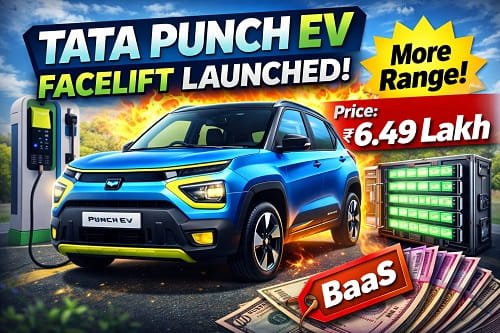
Tata Motors has just taken another big step in India’s electric vehicle story with the official launch of the 2026 Tata Punch EV facelift. This updated version isn’t just a cosmetic refresh. It brings tangible upgrades in range, battery options, tech, and pricing strategy — all aimed at making EV ownership more attractive to everyday Indian buyers. The facelift was unveiled on 20 February 2026 and represents a major push by India’s largest EV maker to expand its reach in the entry-level electric SUV segment.
A Fresh Look, Inside and Out
At first glance, the new Punch EV carries forward the original’s quirky, SUV-like charm but with sharper styling cues. The front end is cleaner, with a sealed-off grille and a full-width LED light bar linking the daytime running lamps — a signature EV design trend. The facelift also sports new aero-optimised alloy wheels and fresh exterior colours that give it a more modern stance. Inside, the dashboard layout feels familiar, yet is updated with better trim finishes, dual large screens, and added comfort features that bring it closer in feel to Tata’s higher-priced EVs.
Two Battery Options, Longer Range
One of the most talked-about upgrades is the new battery setup. Tata now offers two pack choices:
● A 30 kWh battery for everyday city use, paired with an efficient electric motor suited to short-to-medium drives.
● A new 40 kWh battery that significantly stretches the Punch EV’s reach, delivering a claimed range of up to 468 km on a single charge (ARAI-certified).
This dual-battery strategy means buyers can choose based on their driving needs — whether the typical urban commuter distance or longer journeys that spark range anxiety in most EV owners.
Pricing That Catches Attention
Perhaps the boldest part of this launch is the pricing. Tata Motors has introduced a Battery-as-a-Service (BaaS) option that decouples the cost of the battery from the vehicle price. With this model, the Punch EV’s ex-showroom price starts at just ₹6.49 lakh — a figure that suddenly puts electric ownership within reach of many more buyers in India. Under BaaS, buyers pay a per-kilometre battery usage cost, reported at around ₹2.6/km, which keeps the upfront cost low and predictable for day-to-day use.
For the traditional full-ownership route with battery included, the Punch EV starts at roughly ₹9.69 lakh (ex-showroom), sliding up depending on variant and battery pack. Higher trims with the bigger 40 kWh battery push the price toward the ₹12 lakh bracket.
This pricing strategy is a clear attempt by Tata to match internal combustion engine (ICE) rivals in affordability. EVs have long struggled in India because battery costs made them more expensive than petrol or diesel options. With BaaS, Tata seeks ICE-like pricing parity while offering electric benefits.
Tech and Features That Matter
Beyond battery choices and price, the Punch EV facelift comes loaded with features that Indian buyers expect — and some they didn’t know they needed. Standard and higher-end variants include:
● A 10.25-inch infotainment touchscreen with connected car tech and support for Android Auto and Apple CarPlay
● A 10.25-inch digital driver display that presents driving info clearly
● 360-degree camera, ventilated seats, wireless charging, and ambient lighting on higher trims
● Safety features like six airbags, Electronic Stability Program, Hill Hold Assist, and tyre pressure monitoring systems.
This comprehensive feature set signals that the Punch EV facelift isn’t just about value but living comfort and convenience — areas that matter in India’s compact SUV market.
Fast Charging and Warranty Confidence
Charging anxiety is another major concern for EV buyers. Tata has boosted the Punch EV’s fast-charging capability — claiming a 20-80 percent charge in around 26 minutes on a suitable DC fast charger. That’s a practical number for highway stops and long trips. Tata also sweetened the deal with a lifetime high-voltage battery warranty, offering peace of mind that can reduce long-term ownership worries.
What It Means for India’s EV Scene
The Punch EV facelift lands at a crucial time in India’s EV journey. With government targets to increase EV market share and automakers racing to develop affordable electric options, Tata’s move could have wider impact. Competitors like Maruti Suzuki’s e-Vitara and others offering BaaS or competitive pricing are pushing the envelope — but the Punch EV’s range, pricing mix, and feature list give it a compelling edge.
For buyers, this means real choice. EV ownership is no longer limited to tech enthusiasts or premium buyers. It’s becoming a practical choice for families, daily commuters, and even first-time car owners who want low running costs without sacrificing the features they expect from modern vehicles.
Final Thoughts
The 2026 Tata Punch EV facelift is more than just an update. It’s an aggressive statement that affordable, capable electric vehicles can thrive in India. With a strong range, flexible pricing through BaaS, and a tech-rich package, Tata is setting the bar for entry-level EVs in the country. Whether you’re curious about electric mobility or ready to take the plunge, the Punch EV now sits near the top of the shortlist for buyers who want value without compromise.