India’s democracy stands on one quiet but powerful document — the electoral roll. Every vote, every mandate, and every government traces back to this list. When it is inaccurate, elections lose credibility. When it is clean, democracy gains strength. That is why the Special Intensive Revision (SIR) of electoral rolls matters, especially the ongoing 2025–26 exercise, which marks a turning point in how India verifies its voters.
Conducted under the authority of the Election Commission of India, this SIR combines legacy data, artificial intelligence, and digital verification tools. It aims to correct long-standing errors while adapting to large-scale migration, urban growth, and identity duplication. The effort is ambitious — and controversial.
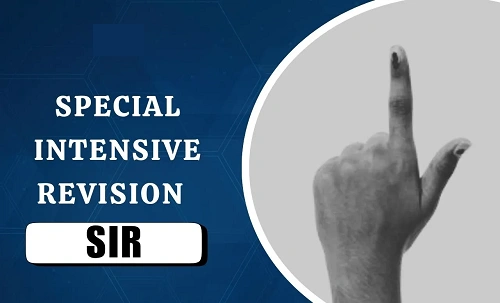
What Is Special Intensive Revision (SIR)?
Special Intensive Revision is a comprehensive, one-time revision of electoral rolls in a defined area. It is different from routine annual updates. SIR is ordered when voter lists show serious distortions due to:
- Migration and urbanisation
- Large numbers of duplicate or dead voters
- Administrative changes or delimitation
- Repeated complaints about bogus entries
During SIR, authorities may re-verify existing voters, delete ineligible names, and actively add eligible citizens who were left out earlier.
The legal foundation of this process lies in the Representation of the People Act, 1950, which empowers election authorities to revise electoral rolls to maintain accuracy and fairness.
How the SIR Process Works
The standard SIR process includes:
- Official notification by election authorities
- House-to-house verification by Booth Level Officers (BLOs)
- Scrutiny of documents related to age, identity, and residence
- Publication of draft rolls
- Claims and objections from the public
- Final publication of revised rolls
In theory, no voter should be removed without notice or an opportunity to respond. In practice, the quality of implementation varies.
What Makes the 2025–26 SIR Different?
1. Digital Pre-Mapping: Using the Past to Protect the Present
A major innovation this time is Digital Pre-Mapping. Instead of treating all voters as fresh entries, current rolls are digitally matched with electoral databases from 2002–2005.
If a voter can be mapped to:
- Their own earlier voter record, or
- A parent or ancestor listed in older rolls
…the burden of documentation is significantly reduced. This change protects long-settled families from repeated verification while still allowing authorities to remove illegitimate entries.
This approach marks a shift from suspicion-based verification to continuity-based verification.
2. AI and “Logical Discrepancies” in ERO Net
The ERO Net system now uses Artificial Intelligence to flag anomalies, including:
- PSE (Photo Similar Entries): Facial recognition detecting the same face under different identities
- DSE (Demographic Similar Entries): Identical names, birthdates, and family details clustered across rolls
- Logical Discrepancies: Impossible data patterns, such as a voter older than their recorded parent
These flags do not automatically delete voters. They are meant to prompt human verification by BLOs and Electoral Registration Officers.
3. Voluntary Aadhaar Linking Through Form 6B
Form 6B, which allows voluntary Aadhaar linking, has become a central tool in this SIR. While Aadhaar is officially optional, it is widely used to:
- Confirm residence quickly
- Resolve duplicate entries
- Reduce repeated field verification
For many voters, Aadhaar has become the most convenient way to avoid delays, even though concerns remain about consent and indirect pressure.
Quick Snapshot: Scale of the 2025–26 SIR
| Metric | Current Impact |
| States Covered | 12 |
| Voters Removed | ~6.5 crore |
| Main Category | ASD (Absent, Shifted, Deceased) |
| New Technology | AI-based facial & logical discrepancy flagging |
| New Voter Form | Form 6 (Jan, April, July, Oct cut-off dates) |
Advantages of Special Intensive Revision
1. Cleaner Electoral Rolls
Duplicate, deceased, and shifted voters are systematically removed, improving roll accuracy.
2. Reduced Electoral Fraud
Bogus voting and impersonation become harder when identity and residence are verified.
3. Protection for Legacy Voters
Digital pre-mapping reduces harassment of families that have voted for generations.
4. Better Inclusion of Missing Voters
Migrants, first-time voters, and urban residents often get added during active verification.
5. Fewer Post-Election Disputes
Cleaner rolls reduce allegations of manipulation after elections.
Disadvantages and Emerging Controversies
1. Risk of Large-Scale Exclusion
In early 2026, investigative reports claimed that around 3.66 crore voters in states such as West Bengal and Madhya Pradesh were flagged as “suspects” by algorithmic systems. Critics warned that opaque AI tools, without adequate ground checks, could lead to wrongful deletions.
2. Lack of Algorithmic Transparency
Voters are rarely told why they were flagged. This creates fear and mistrust, especially among marginalised communities.
3. Informal Instruction Channels
Legal challenges reached the Supreme Court of India in January 2026, alleging that BLOs were receiving operational instructions through WhatsApp rather than formal manuals, leading to inconsistent application of rules.
4. Disproportionate Impact on Vulnerable Groups
Migrant workers, homeless citizens, elderly voters, and those lacking stable documents face the highest risk during SIR.
5. Administrative Pressure
Tight deadlines, heavy workloads, and uneven training increase the chances of error at the field level.
Safeguards Built Into the SIR Framework
On paper, the SIR process includes several safeguards:
- Notice before deletion and opportunity to respond
- Mandatory human verification despite AI flags
- Multi-layer approval, from BLO to ERO
- Post-deletion remedies through Form 6
The real challenge is not the absence of safeguards, but uneven implementation across regions.
How Citizens Can Check and Protect Their Voter Status (2026)
Voters are expected to be proactive during SIR:
- Voter Helpline App – check status, respond to notices, file objections
- eci.gov.in – verify name, submit Form 6 or 6B, track applications
Ignoring SIR notices can result in deletion that may take months to reverse.
Conclusion
The 2025–26 Special Intensive Revision is one of the most ambitious electoral roll exercises India has ever undertaken. Its mix of historical data, AI tools, and digital identity checks has the potential to strengthen democracy — or strain it.
The core challenge is balance. Accuracy must not come at the cost of inclusion. Technology should assist human judgment, not replace it. If implemented with transparency, care, and accountability, SIR can protect the voter’s voice. If rushed or misused, it risks silencing it.
In a democracy of this scale, that difference matters more than anything else.