The long-simmering frustration around Staff Selection Commission (SSC) examinations has now taken a legal turn. A defamation case filed in a Delhi court has brought YouTuber Nitish Rajput and exam-conducting firm Eduquity Technologies Pvt. Ltd. into a direct face-off.
At first glance, this may look like a standard legal dispute. In reality, it reflects something much deeper—years of anxiety, mistrust, and unresolved concerns faced by millions of government job aspirants across India.
What Triggered the Legal Battle
The controversy began after Nitish Rajput uploaded a video questioning the SSC examination process, particularly the appointment and functioning of private vendors involved in conducting the exams. The video touched upon recurring issues that aspirants often complain about—technical glitches, exam delays, and logistical failures.
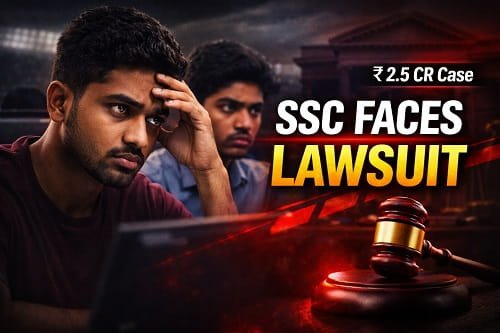
Soon after, Eduquity Technologies filed a ₹2.5 crore defamation suit, alleging that the video contained misleading statements that harmed the company’s reputation. According to media reports, the firm argues that such public allegations—when not backed by verified facts—can seriously damage trust with government institutions.
With that, a debate that was playing out on social media moved straight into the courtroom.
Why This Case Matters Beyond Two Parties
Legally, the case is between a content creator and a private company. Publicly, however, it has reopened a much larger discussion about the credibility of competitive examinations in India.
SSC exams are not minor tests. They decide careers. For many candidates, especially from smaller towns and modest backgrounds, SSC represents stability, dignity, and a way out of uncertainty. When exams are postponed or disrupted due to technical failures, the cost is not just inconvenience—it is emotional and financial.
That’s why Rajput’s video struck a nerve. It echoed what aspirants have been saying for years, often without any meaningful response.
Eduquity’s Perspective: Reputation at Stake
From Eduquity’s standpoint, the lawsuit is about safeguarding credibility. Companies that handle national-level exams operate under intense scrutiny. Any suggestion of incompetence or wrongdoing—especially when amplified to millions online—can threaten future contracts and institutional trust.
Defamation law exists precisely for this reason. If a court finds that statements were presented as facts but were inaccurate or misleading, the company has a legal right to seek damages.
This makes the case less about silencing criticism and more about drawing a line between critique and allegation.
The Key Legal Questions Before the Court
The Delhi court will likely focus on a few critical points:
● Were the statements factual or opinion-based?
Opinions and criticism are protected speech. False statements of fact are not.
● Was due diligence followed?
Did the video rely on verified sources, documents, or official data?
● Was reputational harm clearly caused?
A ₹2.5 crore claim requires proof of actual damage, not just public discomfort.
The outcome could quietly influence how educational content is produced on platforms like YouTube going forward.
Why Aspirants Are Watching Closely
For students, the lawsuit feels symbolic. Many fear that instead of fixing systemic problems, attention is being diverted toward legal action. The underlying issues—unstable exam software, poor coordination, and lack of transparency—remain unresolved.
At the same time, some also acknowledge that misinformation, if any, should be challenged responsibly. The real demand is not drama, but reform.
A Larger Moment for Digital Accountability
This case sits at an uncomfortable intersection of free expression and responsibility. Social media has given educators and commentators massive reach. With that reach comes influence—and legal exposure.
Creators now face a clear signal: strong claims require strong evidence. Institutions, on the other hand, are reminded that credibility cannot be rebuilt in courtrooms alone.
The Bottom Line
The Nitish Rajput–Eduquity case is not just about defamation. It is about trust—between students and exam systems, between institutions and the public, and between digital voices and accountability.
The court will decide who is legally right. But the larger issue remains untouched: until SSC exams become consistently smooth, transparent, and reliable, controversies like this will keep returning—video or no video.