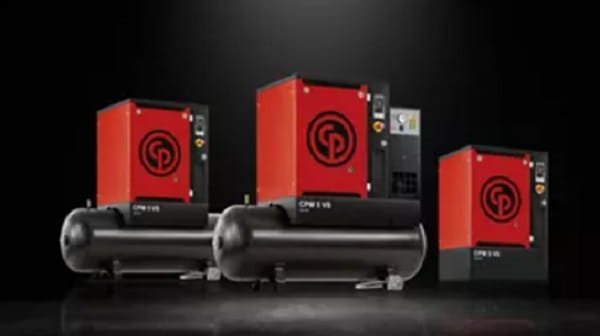
Screw compressors are some of the most advanced air compressors used in several industrial activities. But even advanced machinery can face problems. A common issue with these types of compressors is that a lot of times it starts and stops in quick succession. Short cycling is a term used when a compressor cycles on and off.
There can be multiple reasons why a screw compressor might undergo short cycling. Let’s take a look into why your compressor is short cycling:
What is short cycling?
Short cycling happens when the demand and supply of air are mismatched or there is a flaw in the distribution line. The rotary screw compressor fails in the loading and unloading process, which causes pressure fluctuations or even breakdowns in the long run.
The most common causes for short cycling:
Systemic Air Leaks: The most common cause of short cycling. Even a collection of “minor” leaks in hoses, couplings, or seals forces the tank pressure to drop rapidly. To compensate for the lack of pressure, the compressor then kicks in, creates pressure, and shuts off, only for the leak to drain the tank again seconds later.
Excessive Unit Sizing: Compressor size should always match the requirement. If your compressor’s output capacity significantly dwarfs your actual air consumption, it will reach its “cut-out” pressure almost instantly and shut down, repeating the cycle as soon as a small amount of air is used.
Malfunctioning Pressure Switches: Worn-out or miscalibrated start and stop sensors can cause a “differential” (the gap between start and stop pressure), which might be too narrow, causing rapid-fire cycling.
The Hidden Costs of Frequent Short Cycling
In every short cycle, when the compressor is “turning back on,” it is undergoing a high-stress event.
1. Electrical and Mechanical Strain
Starting a motor requires a massive surge of current, which is often several times higher than the running current. Constant cycling prevents the motor windings from cooling down, leading to insulation breakdown and, eventually, a burnt-out motor.
2. Efficiency Loss
Compressors are most efficient when they reach a steady operating temperature and state. Frequent short cycling means that the machine spends most of its time in a “transient” state, consuming maximum power for minimum air output.
Proactive Strategies for a Healthier Compressor
To extend the life of your equipment and stabilize your operations, consider these solutions:
- Conduct a Leak Audit: A frequent leak audit will save you time and costs in the long run. Use ultrasonic leak detectors or simple soapy water to identify and seal leaks in your compressed air network. Reducing “artificial demand” is the fastest way to stop short cycling.
- Adjust Pressure Settings: Check your pressure switch settings. Widening the pressure band (the difference between the cut-in and cut-out points) can give the machine longer rest periods between runs.
- Add Secondary Air Storage: If your compressor is slightly oversized or your demand is “peaky,” adding an extra air receiver tank acts as a buffer. This increased volume prevents the pressure from dropping too quickly, allowing for longer, more stable run cycles.
Connect with an expert
Identifying whether the issue is a simple leak or a fundamental sizing error is key to saving your motor. By understanding the causes behind the short cycling, businesses can improve the life cycle of their screw compressors. Proper sizing, maintenance, and understanding environmental hazards are key to keeping your air compressors running and in a reliable state.
Quick FAQ
- Is this an emergency? Not quite, but if your unit cycles more than 10 times per hour, you’re on the fast track to a broken motor.
- Can I fix it myself? Often, yes! Tightening loose fittings to stop leaks is the best place to start.
- Will a bigger tank help? Adding a receiver tank gives your system more “breathing room” so it doesn’t have to restart so often.